
Predict This: Kalshi, Polymarket revisit $20B raises
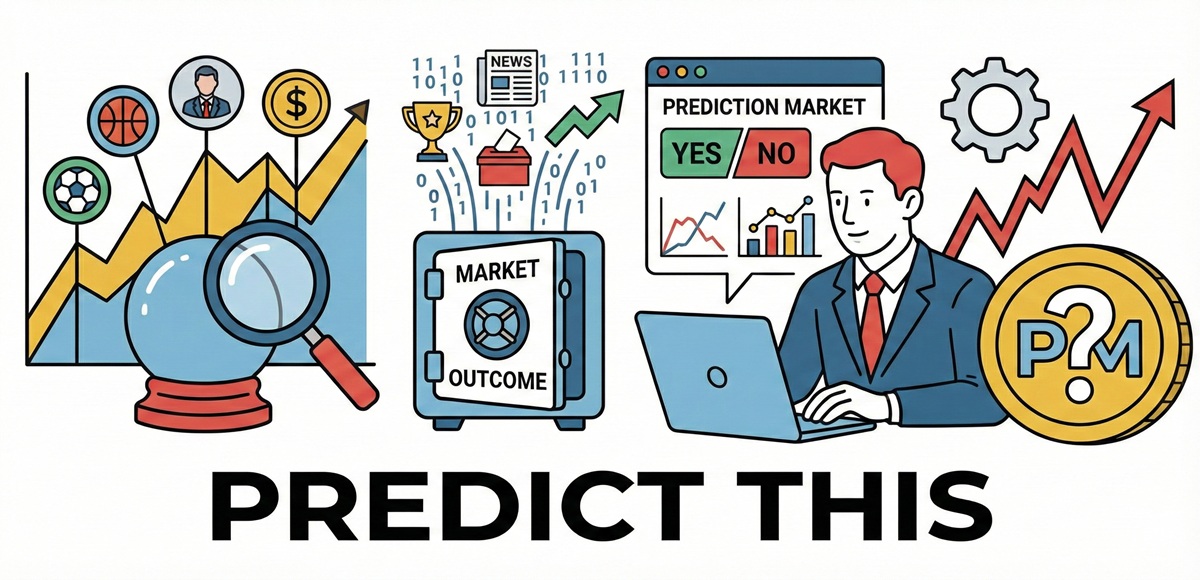
The Signal
Kalshi and Polymarket are revisiting the same headline number—~$20B valuations—in early fundraising conversations, per the WSJ and follow-on reporting (The Block, CoinDesk). The “revisit” matters: the market is no longer reacting to a one-off leak, it’s watching whether the price of category leadership is being set in real time.
If either platform can actually clear $20B in new money, it reframes prediction markets from ‘hot consumer wagering’ into ‘durable market-structure’—and raises the bar for what investors will demand on compliance, surveillance, and contract governance. The twist is that this capital-markets flex is landing amid widening political and state-level pushback, meaning the round (if it happens) is as much about buying regulatory runway as it is about growth.
The Mechanism
- $20B is a signaling valuation. At that level, investors aren’t just underwriting current take-rate on retail flow; they’re underwriting default-venue status—being the reference price that media, brokers, and institutional desks quote.
- Kalshi’s capital need is “regulated expansion + litigation budget.” As a CFTC-regulated venue, Kalshi can pitch onshore durability—but it also faces the most expensive version of scaling: compliance headcount, surveillance tooling, and legal fights where states argue certain contracts look like sports betting.
- Polymarket’s capital story is “liquidity + distribution,” with structure risk. The platform can point to global participation and fast product iteration; investors will discount that unless Polymarket can keep building credible U.S.-adjacent rails and governance that partners can tolerate.
- The rounds are implicitly a market-maker and partner war chest. Higher valuation conversations usually precede bigger incentives: tighter spreads (MM deals), more aggressive affiliate/media distribution, and possibly subsidized liquidity to win the “most-quoted market” slot.
- Integrity is now a financing term, not a PR issue. Insider-trading headlines and resolution disputes have shifted from “bad optics” to “cost of capital.” Expect diligence to center on surveillance processes, trading controls, and a demonstrable incident-response playbook.
- The fundraising race pressures everyone else. A printed $20B round would compress the strategic space for smaller venues: either specialize (narrow categories, B2B data, enterprise hedging) or attach to a larger regulated distribution partner.
The Landscape
Market Position
This is increasingly a two-front competition: Kalshi sells regulatory status and precedent-setting, while Polymarket sells cultural mindshare and global liquidity. The $20B chatter is a proxy fight over which moat investors think compounds: “licensed exchange rails” vs “most-liquid marketplace + distribution.” The other platforms in the ecosystem matter, but the pricing power—who gets quoted, embedded, and treated as the signal—has consolidated around these two brands.
Regulatory Environment
Policy risk is not receding; it’s becoming the gating item for valuation. State challenges to event contracts framed as sports betting, federal attention around “government action” markets, and a drumbeat of integrity criticisms are converging into a single investor question: what fraction of today’s product surface area survives contact with regulators and lawmakers? The answer will determine whether $20B is a ceiling created by exuberance—or a floor created by category entrenchment.
Key Data
- Reported valuation targets: ~$20B each for Kalshi and Polymarket in preliminary talks (The Block).
- Prior reported marks: Kalshi ~$11B, Polymarket ~$9B (late-2025) (CoinDesk).
- Implied step-up: roughly ~2x vs those most recent valuations if $20B prints.
- Status contrast emphasized in coverage: Kalshi is CFTC-approved/regulated; Polymarket’s deepest liquidity is tied to its international venue, with separate U.S.-regulated branding appearing in some product pages and partnerships (platform disclosures/press context).
What’s Next
Watch for structure details before you watch for a number: whether the rounds are primary-heavy vs secondary, who the lead is (TradFi brand-name vs crypto-native), and whether either platform ties capital to explicit compliance/surveillance commitments (the tell that regulation is now underwriting the business model). The next catalyst is any concrete term-sheet leak that reveals who is willing to price prediction markets like an exchange—and what governance concessions they require to do it.
Predict This covers the evolution of prediction markets — platforms, regulation, volume, and methodology. For questions or tips: reply to this email.
🌐 Visit whatsthelatest.ai for the latest coverage and more.
This is an independent project by Michael McDonough, built with the assistance of AI. Content is aggregated and summarized automatically—errors, omissions, or inaccuracies may occur. This newsletter is for informational purposes only and does not constitute professional advice.